
We are living through a profound crisis of identity, one that appears to be engineered to create instability, especially in the youth. Any brief perusal of popular culture reveals that the definition of a man (and woman) changes by the week. On one side, traditional masculinity is labeled as inherently toxic; on the other, hyper-aggressive internet subcultures promise a return to power that feels entirely hollow.
For the average man, it feels like navigating a minefield – blindfolded.
Let’s strategize together: to build a healthy, impactful life, we have to clear the cultural noise and ask the foundational questions: Who are we, what are we called to be, and how do we get there?
1. Defining a Man: Biology vs. Character
The first hurdle our generation faces is defining what a man actually is. Is a man defined strictly by his sex, or by a specific set of attributes?
To answer this, we have to look at the distinction between a biological male and a mature man.
Biological age and physical growth happen automatically; true maturity requires deliberate intent. Being male is a physical reality—a baseline given to us by creation, beyond our choosing. From a scriptural standpoint, biology is an intentional design, not a cosmic accident. Genesis 1:27 states:
"So God created mankind in his own image, in the image of God he created them; male and female he created them."
However, being a man—in the truest sense of the word—is defined by attributes and character. Biology is a birthright; manhood is an earned maturity. A person can reach full biological manhood while remaining relationally, emotionally, and spiritually an infant.
When the Apostle Paul wrote, "When I was a child, I talked like a child, I thought like a child, I reasoned like a child. When I became a man, I put the ways of childhood behind me" (1 Corinthians 13:11), he wasn’t talking about a sudden biological shift. He was talking about a conscious decision to adopt attributes of responsibility, self-control, and active love.
2. Manhood vs. Masculinity
While these two words are often used interchangeably, separating them apart gives us a much clearer roadmap.
- Manhood is a state of being and a standard of maturity. It is the transition from dependence (childhood) to independence (adulthood) and, ultimately, interdependence—taking care of others. Manhood is about taking responsibility for one’s actions, keeping one’s word, and anchoring oneself in integrity. It also encompasses accountability, both to others, and to God.
- Masculinity is the expression of that manhood. It encompasses the distinct traits, energies, and behaviors traditionally associated with men—such as strength, competitiveness, leadership, drive, and the instinct to protect and provide. The has historically been the traditional role that young boys were raised to envisage – and to pursue. Many ancient tribal cultures held a rite of passage through a boy needed to pass before he was accepted by other men as ‘ready’ for more responsibility as a man.
The danger today is that our western culture focuses entirely on redefining masculinity —making it softer, harder, or erasing it altogether—while completely ignoring manhood.
True masculinity is not about the volume of your voice or the size of your biceps; it is physical and emotional strength harnessed for the good of those around you.
A good analogy is to think of manhood as the engine of a car (its core identity and power) and masculinity as the way that car is driven.
3. What is a "Man of God"?
If manhood is the baseline standard, a "man of God" is the ultimate expression of that standard, aligned with (and toward) the heart of the Creator.
Think: King David. Although far from perfect, David sought to please His God, by following His commands, and striving to become what he was created and called to be.
Culture often tells men that to be powerful, they must be entirely self-sufficient, answering to no one. False – that is isolation. Scripture flips this upside down. A man of God is fundamentally a man under authority. He recognizes that his strength is not his own, and he submits his will, his desires, and his ego to King Jesus.
In simple terms, spiritual maturity is defined as much by what a man chooses to walk away from as what he actively pursues.
In 1 Timothy 6:11, Paul explicitly outlines this blueprint:
"But you, man of God, flee from all this, and pursue righteousness, godliness, faith, love, endurance and gentleness."
Notice the brilliant balance of attributes here. It demands both fierce resolve (flee, pursue, endurance) and deep, relational tenderness (love, gentleness). A man of God is not a passive pushover, nor is he a reckless tyrant.
He is meek—a word that historically didn’t mean "weak," but rather "power under control." Think of a Ferrari idling at a traffic light. He has the strength to fight, but the wisdom to know when to extend grace.
4. The Path:
How Does One Become a Man of God?
Nobody wakes up one morning and fortuitously finds himself a spiritually mature, impactful man. It has never happened. Rather, it is a process of intentional formation.
Growth is a progression through a series of challenges over a period of time, that often exposure to risks (and danger) – it is learning the wisdom to get up when you have been knocked down, and to not repeat that same mistake.
A Path of Transformation can be tracked, based on the biblical model whereby we move from a Passive Male to a Man of Purpose
Becoming a man of God requires three critical elements:
- Discipleship and the Word
You cannot align your life with God’s blueprint if you don’t know what the blueprint looks like. Psalm 119:9 asks, "How can a young man stay on the path of purity? By living according to your word." It takes daily, disciplined study to deconstruct the lies the world tells us about success and replace them with divine truth. Study infers a regular habit of Bible reading together with focused prayer.
- The Crucible of Accountability
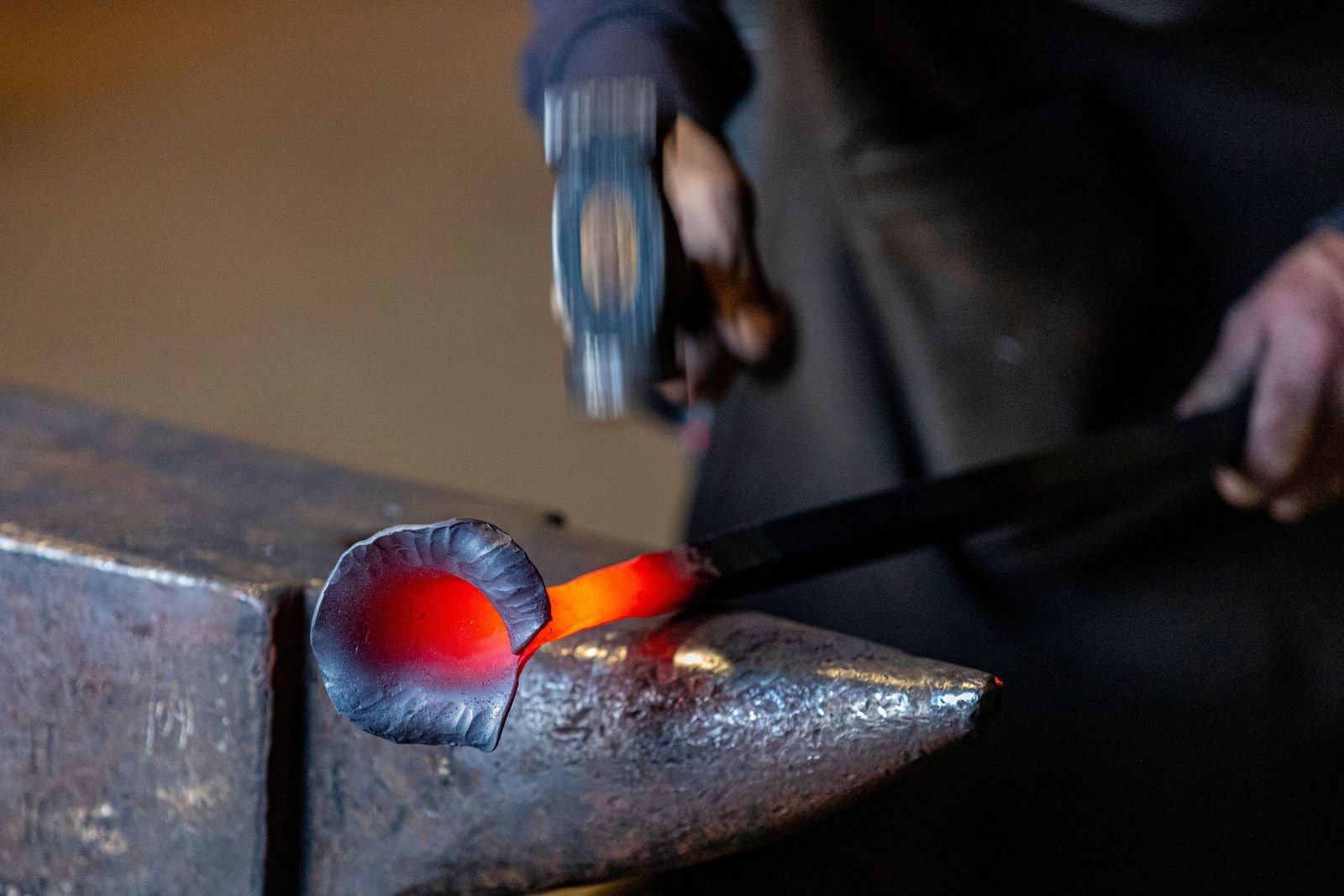
A brief aside: a crucible is a small, heat-resistant container, or dish—often ceramic, porcelain, graphite, or metal—used to heat, melt, or test substances at extremely high temperatures, often in a laboratory or smelter. Its purpose is to contain material safely during high-heat chemical or metallurgical work.
Figuratively, a “crucible” is a severe trial or challenging experience that tests and often transforms a person. And Jesus gave us a sober warning that we will face trouble (John 16:33), and pass through many trials (James 1: 2-5) which are for our benefit, so that we may be refined as silver (Psalm 66:10) – they are character builders.
Manhood cannot be learned in isolation. Left to our own devices, men tend to isolate and drift into destructive habits. We need brothers who have permission to look us in the eye and call us out.
As Proverbs 27:17 famously notes: "As iron sharpens iron, so one person sharpens another."
- Embracing Responsibility
While a boy looks for comfort and entertainment; a man looks for responsibility. Becoming a man of God means stepping up when it is inconvenient—in your marriage, your parenting, your local church, and your career. It means being the first to apologize and the first to serve. Paul sums up this transition to manhood in 1 Corinthians 13:11:
“When I was a child, I spoke as a child, I understood as a child, I thought as a child; but when I became a man, I put away childish things.”
5. The Critical Role of Men in Society Today
Why does this matter so much right now? Because society is broken – it is suffering deeply from the absence of true men. When men vacate their post, families fracture, communities destabilize, and the vulnerable suffer.
The unique role of a man of God in society today breaks down into three primary functions:
|
Role |
Operational Focus |
Scriptural Anchor |
|---|---|---|
|
The Protector |
Shielding the vulnerable from injustice; creating safe emotional spaces for family and community. |
“Learn to do right; seek justice. Defend the oppressed.” — Isaiah 1:17 |
|
The Provider |
Cultivating resources, spaces, and spiritual strength so that others can thrive. |
“Anyone who does not provide for their relatives… has denied the faith.” — 1 Timothy 5:8 |
|
The Repairer |
Stepping into broken communities to rebuild relationships, mentor younger men, and restore hope. |
“You will be called Repairer of Broken Walls.” — Isaiah 58:12 |
Modern society doesn’t need men to step back timidly; it needs men to step up to the plate differently. It needs men who will use their strength not to dominate, but to elevate. It needs men who look at a broken world and say, "I will take responsibility for fixing this patch of ground."
Conclusion: A Call to the Post
Ultimately, to be a man today is to live a life of sacrificial love. We have the ultimate template in Jesus Christ, who did not come to be served, but to serve, and to give His life as a ransom for many (Mark 10:45).
If you want to live a life that cuts through the noise of our generation, stop arguing about what a man is, and start living out the calling. The world doesn’t need more toxic machismo, nor does it need passive bystanders. It needs men of God—disciplined, loving, courageous, and submitted to the King—standing firm at their posts.
Let’s prayerfully, but resolutely start taking steps to lead the lost.
Finally, be strong in the Lord and in His mighty power (Ephesians 6:10)
~*~