Have you ever wondered why certain habits seem impossible to break, even after years of trying? Why do specific fears, resentments, past regrets, or recurring temptations keep resurfacing, no matter how often you pray about them?
Many older men carry mental and emotional burdens that have followed them for decades. Some battle a flash-fire anger that flares up over minor frustrations. Others carry a quiet bitterness from decades-old business disputes or church splits; some have a lingering fear about financial security in retirement, or harbor deep feelings of inadequacy that never seem to fade.
Over time, these patterns become so familiar that we simply shrug and tell ourselves, "That’s just how I’m wired."
I remember working on a project years ago where a solid steel bolt had been left exposed to the elements for decades. It was rusted so solid into the iron frame that it seemed part of the metal itself. I tried standard wrenches, penetrating oil, and sheer force, but nothing budged. It wasn’t until heat was applied directly to the nut that the rust binding it broke apart.
Many of us treat our internal struggles the same way: we assume a long-held attitude or pattern is permanent. But what if those entrenched struggles aren’t just personality quirks? What if they are spiritual strongholds?
The Bible teaches that a silent, unrelenting battle takes place in the human mind. One of the enemy’s most effective tactics is to establish fortified strongholds in our thinking. Understanding what strongholds are—and how to dismantle them—is essential for any man who wants to walk in genuine freedom and finish his life’s journey well.
1. What Is a Stronghold?
The Apostle Paul writes directly about this battle:
"The weapons we fight with are not the weapons of the world. On the contrary, they have divine power to demolish strongholds." — 2 Corinthians 10:4
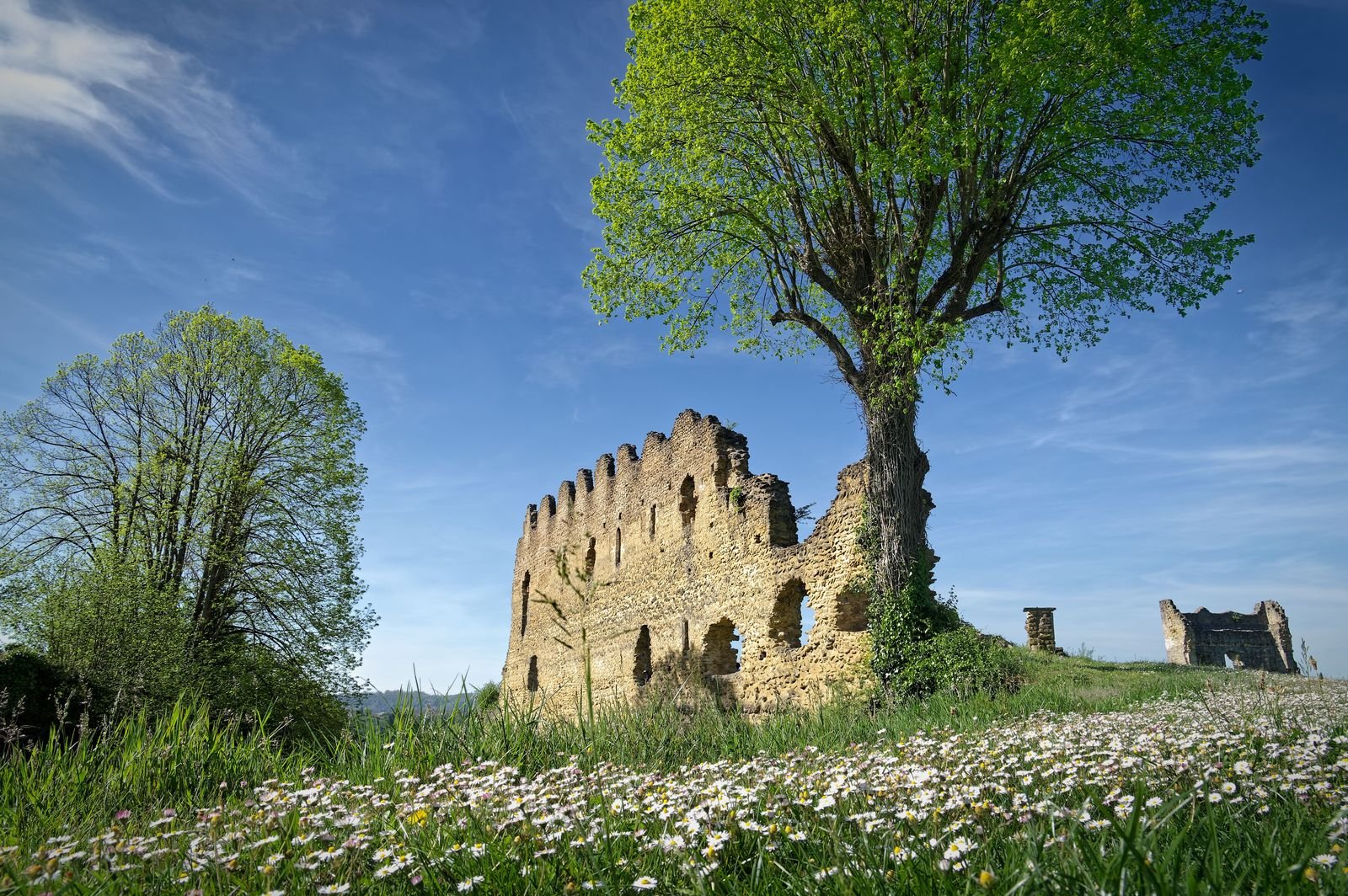
The type of stronghold he is refering to is not a physical stone fortress. It is a mental, emotional, or spiritual framework built on persistent lies that you have either heard over the years – or told yourself – that oppose the truth of God.
Strongholds develop when false assumptions become deeply rooted in our daily thinking. Over time, they begin to sound like a reasonable inner dialogue:
- "I’m too set in my ways to change now."
- "If people really knew my past, they’d walk away."
- "I’ve done my time; I’m too old to make a real difference."
- "Tempers just run in my family; it’s in my blood."
- "There’s no point in trying to fix that relationship now."
These thoughts become dangerous the moment we quit questioning them and begin accepting them as immutable facts.
The enemy of our souls uses disappointment, business failure, rejection, personal loss, and pride to construct these internal walls. Over years, they become opaque, fortified positions from which these same false beliefs influence our decisions, reactions, and relationships.
2. How Do Strongholds Develop Over Time?
Strongholds rarely appear overnight; like weeds in an untended garden, they grow slowly and quietly, almost unnoticed.
Many begin with an acute, painful experience: a harsh word spoken by a father or teacher decades ago, a sudden business bankruptcy, a broken marriage, or a moral failure that still haunts your quiet moments.
When those events happen, a subtle narrative creeps in:
- "You’ll never recover from this mistake."
- "Nobody actually respects you."
- "God has set you on the shelf."
If those thoughts are left unchallenged, they begin to dictate how we view ourselves and others. Eventually, we stop recognizing them as deceptive ideas and accept them as reality. Hence, the repeated lie becomes the lived reality.
For mature men, strongholds can become especially entrenched simply because they have had forty or fifty years to settle into place. Think of an old building that has settled on its foundations. A lie rehearsed for half a century can feel far more real than a verse read from a page.
That is why Scripture emphasizes "taking captive every thought to make it obedient to Christ."
The battle for a man’s character is almost always won or lost in the quiet theater of his mind long before it shows up in his actions.
3. How Can You Recognize a Stronghold?
Recognizing a stronghold is the necessary first step toward dismantling it. A stronghold is usually present when you find yourself trapped in a recurring emotional or behavioral loop that resists basic willpower.
Ask yourself these direct questions:
- Do I continually struggle with the same destructive habit despite sincere vows to stop?
- Do I default to intense emotional reactions—like sudden explosive anger, withdrawal, or cynicism—when challenged?
- Are there areas of my life where I find it nearly impossible to trust God’s promises or accept His forgiveness?
- Do I entertain negative narratives about my worth or future that directly contradict Scripture?
A stronghold has one defining characteristic: it consistently opposes what God says about you.
If God’s Word declares that you are fully forgiven in Christ (It does) – but you live under a perpetual dark cloud of guilt and condemnation, a stronghold is operating. If God promises His peace (He does) – but anxiety and suspicion rule your daily thoughts, that false belief system needs to be inspected and brought into the light.
4. The Playbook for Dismantling Strongholds
The good news is that strongholds are not permanent structures. Paul assures us that God provides weapons with divine power to demolish them.
We are not passive victims of our past or our hardwired habits. Let’s take a logical approach to understanding what we are confronting:
1. Name the Specific Lie
Every stronghold rests on a foundational lie. Ask the Lord to reveal the specific false assumptions that have shaped your reactions. Write them down clearly. Bring them into the light where secrecy loses its leverage. You cannot dismantle a lie you refuse to name it. Naming it gives it a form and measure – and a face.
2. Replace Deception with Scripture
Strongholds weaken when exposed to truth. When Jesus was confronted with temptation in the wilderness, He didn’t debate or rely on human logic; He repeatedly stated, "It is written." He spoke from established truth.
The Word of God acts like focused heat on a rusted bolt—it breaks the bond of long-held deceptions (Hebrews 4:12).
- If fear dominates your thinking, memorize passages on God’s sovereignty and protection.
- If guilt drags you down, anchor your mind in passages declaring full justification and grace.
- If cynicism has hardened your heart, study biblical promises regarding hope and renewal.
3. Evict Unwanted Thoughts
Not every thought that enters your head deserves permanent residence. Do not entertain it – make it unwelcome.
A seasoned mechanic knows that a knocking sound in an engine means something needs immediate inspection, not ignoring.
When a destructive, accusatory, or fearful thought arises, evaluate it immediately:
- Does this thought align with God’s Word?
- Does it produce faith and humility, or despair and pride?
If it contradicts God’s truth, reject it explicitly rather than letting it set up camp.
4. Depend on the Holy Spirit
Dismantling decades-old habits is not a project for human willpower alone. Willpower is like a battery—it will drain under stress. Strongholds are spiritual issues that require spiritual power. The Holy Spirit provides the steady, supernatural strength needed to renew our minds and establish new pathways of integrity.
5. Persevere in Prayer and Brotherhood
Wall demolition takes deliberate effort. Strongholds built over thirty years may not crumble in thirty seconds. They may require a supernatural sledgehammer to be applied. Continue standing on truth, praying with persistence, and inviting trusted brothers to hold you accountable – ask them to pray for and with you.
The walls may look thick, but they are no match for persistent truth – they will collapse as they lack a firm foundation.
Conclusion: Finishing Well in Freedom
Many older men settle into a quiet resignation, assuming their long-standing struggles, anxieties, or sharp edges are simply permanent fixtures of aging. They just assume a weary state of, "It’s too late for me to change now."
Scripture rejects that passive surrender. Christ did not come merely to grant us a future destination; He came to break bondage and set us free in the present.
|
Long-Standing Lie |
Divine Truth |
Actionable Step |
|---|---|---|
|
"I’m too set in my ways to change." |
"He who began a good work in you will carry it on to completion." (Phil 1:6) |
Replace self-reliance with daily prayer for the Spirit’s renewal. |
|
"My past mistakes disqualify me." |
"There is now no condemnation for those who are in Christ Jesus." (Rom 8:1) |
Confess old guilt and accept the clean slate granted by grace. |
|
"I have to carry this burden alone." |
"As iron sharpens iron, so one man sharpens another." (Prov 27:17) |
Share your secret battle with a trusted mentor or accountability partner. |
Whatever stronghold may have taken root in your life, it is not beyond God’s capacity to demolish. No lie is stronger than His truth, no old habit is stronger than His grace, and no fortress is stronger than His power.
The stronghold of death that long kept men captive was broken at Calvary.
Step into the light. Surrender your thoughts to Christ, anchor your mind in His Word – lean on your brothers, take courage – and watch the walls that once held you back come tumbling down.
Freedom is not just possible—it is your birthright as a son of God.
“So if the Son sets you free, you will be free indeed” (John 8: 36).
~*~